When Did Columbus Sail the Ocean Blue: The Voyage That Changed History
The phrase “When did Columbus sail the ocean blue” is one of the most memorable lines in history education, often used to help students remember the year 1492—the year Christopher Columbus embarked on his first voyage across the Atlantic Ocean. This journey marked a turning point in world history, connecting Europe with the Americas and setting the stage for centuries of exploration, colonization, and cultural exchange. Columbus’s expedition, sponsored by Spain, was driven by a desire to find a new trade route to Asia but instead led to the discovery of lands previously unknown to Europeans. Understanding when and why Columbus sailed the ocean blue provides insight into the Age of Exploration and its profound impact on global history.
1. When Did Columbus Sail the Ocean Blue?
Christopher Columbus set sail on August 3, 1492, from the port of Palos de la Frontera in Spain. His fleet consisted of three ships—the Niña, the Pinta, and the Santa María. After more than two months at sea, Columbus and his crew sighted land on October 12, 1492, reaching what is now known as the Bahamas. This date is immortalized in the rhyme, “In fourteen hundred ninety-two, Columbus sailed the ocean blue,” which serves as a simple way to remember one of the most significant voyages in human history.
2. The Purpose Behind Columbus’s Voyage
The main reason Columbus sailed the ocean blue was to find a faster and more direct route to Asia. During the late 15th century, European nations were eager to access the riches of the East—spices, silk, and gold—without relying on overland routes controlled by Middle Eastern empires. Columbus believed that by sailing west across the Atlantic, he could reach Asia more efficiently. Although his calculations underestimated the size of the Earth, his determination convinced King Ferdinand and Queen Isabella of Spain to fund his expedition. Their support marked the beginning of Spain’s rise as a global maritime power.
3. The Ships That Carried Columbus Across the Atlantic
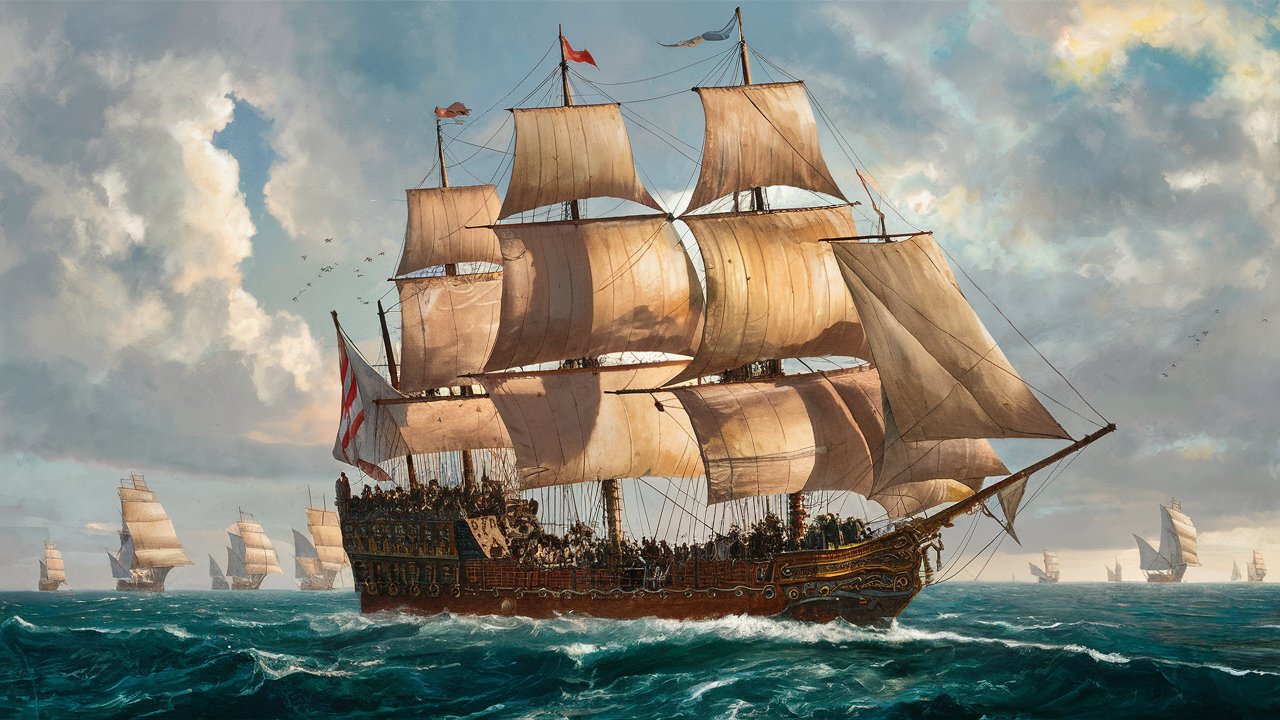
When Columbus sailed the ocean blue, he commanded three ships that have since become legendary: the Niña, the Pinta, and the Santa María. The Santa María was the largest and served as the flagship, while the Niña and Pinta were smaller caravels known for their speed and maneuverability. These ships were equipped with sails designed to harness the trade winds, which carried them westward across the Atlantic. Despite their small size and limited technology, these vessels successfully completed one of the most daring voyages of the era, proving that transatlantic travel was possible.
4. The Journey Across the Atlantic
The voyage that began when Columbus sailed the ocean blue was filled with uncertainty and danger. The crew faced unpredictable weather, dwindling supplies, and growing fear as weeks passed without sight of land. Many sailors doubted Columbus’s leadership and feared they would never return home. However, Columbus’s confidence and navigational skills kept the expedition on course. On October 12, 1492, a sailor named Rodrigo de Triana spotted land, ending the long and perilous journey. The land they reached was part of the Bahamian islands, though Columbus believed he had arrived in Asia.
5. The Discovery of the New World
When Columbus sailed the ocean blue, he had no idea that his voyage would lead to the discovery of an entirely new continent. Believing he had reached the Indies, Columbus called the native inhabitants “Indians,” a term that persisted for centuries. His arrival in the Americas marked the beginning of European exploration and colonization of the Western Hemisphere. Although Columbus never set foot on the North American mainland, his voyages opened the door for future explorers and permanently altered the course of world history.
6. The Impact of Columbus’s Voyage on World History
The year 1492, when Columbus sailed the ocean blue, is often considered the dawn of the modern age. His voyage connected two worlds that had been separated for millennia, leading to the Columbian Exchange—the transfer of plants, animals, cultures, and ideas between Europe and the Americas. This exchange transformed diets, economies, and societies on both sides of the Atlantic. However, it also brought devastating consequences for Indigenous peoples, including disease, displacement, and colonization. Columbus’s journey thus represents both a triumph of exploration and a turning point that reshaped global history in complex ways.
7. The Legacy of Columbus’s Exploration
The legacy of Columbus sailing the ocean blue remains deeply debated. For centuries, he was celebrated as a heroic explorer who “discovered” the New World. However, modern historians recognize that Indigenous civilizations had thrived in the Americas long before his arrival. Today, Columbus’s legacy is viewed through a more nuanced lens—acknowledging his navigational achievements while also confronting the darker consequences of European colonization. His voyages symbolize both human curiosity and the beginning of profound cultural and environmental change.
8. The Role of Spain in Columbus’s Voyage
When Columbus sailed the ocean blue, Spain played a pivotal role in making his journey possible. After being rejected by Portugal and other European monarchies, Columbus turned to the Spanish crown for support. King Ferdinand and Queen Isabella agreed to sponsor his expedition, motivated by the promise of wealth, power, and the spread of Christianity. Their investment paid off, as Columbus’s discoveries laid the foundation for Spain’s vast colonial empire in the Americas. The success of his voyage inspired other explorers, including Hernán Cortés and Francisco Pizarro, to embark on their own expeditions of conquest and discovery.
9. The Myths and Misconceptions About Columbus’s Voyage
Many myths surround the story of when Columbus sailed the ocean blue. One common misconception is that Columbus set out to prove the Earth was round. In reality, educated Europeans of the 15th century already knew the Earth was spherical. Columbus’s challenge was not convincing people of the Earth’s shape but persuading them that Asia could be reached by sailing west. Another myth is that he discovered America, though Indigenous peoples had inhabited the continent for thousands of years. Columbus’s true achievement was bridging the gap between the Old World and the New, forever changing the course of human history.
10. The Enduring Significance of 1492
The year 1492, when Columbus sailed the ocean blue, remains one of the most significant dates in world history. It marked the beginning of global exploration, trade, and cultural exchange on an unprecedented scale. The voyage symbolized humanity’s enduring spirit of curiosity and adventure, as well as the complexities of discovery and conquest. Today, historians continue to study Columbus’s journey not only for its historical importance but also for its lasting impact on the modern world. The story of 1492 serves as a reminder of how one voyage can alter the destiny of nations and civilizations.
Conclusion
The question “When did Columbus sail the ocean blue” leads to a story far greater than a simple date in history. Columbus’s voyage in 1492 was a defining moment that connected continents, transformed global trade, and reshaped human understanding of the world. While his journey is celebrated for its boldness and innovation, it also serves as a reminder of the profound consequences of exploration—both positive and negative. The legacy of Columbus continues to spark discussion, reflection, and reevaluation, reminding us that history is not just about discovery but also about understanding its lasting effects on humanity.